Fragments of the Anthropocene
Fragments of the Antroposcene - 2026-present
fragment (noun)
frag·ment | /ˈfraɡmənt/
A small piece or part that has broken off or become separated from something larger; an incomplete or isolated portion of a whole.
Anthropocene (noun)
An·thro·po·cene | /ˈan-thrə-pə-ˌsēn/
A proposed geological epoch in which human activity has become a major influence on Earth’s environment, climate, landscapes, and ecosystems.
For an art project, it can also describe the physical traces humans leave behind, waste, objects, altered landscapes, pollution, and other evidence of our presence.
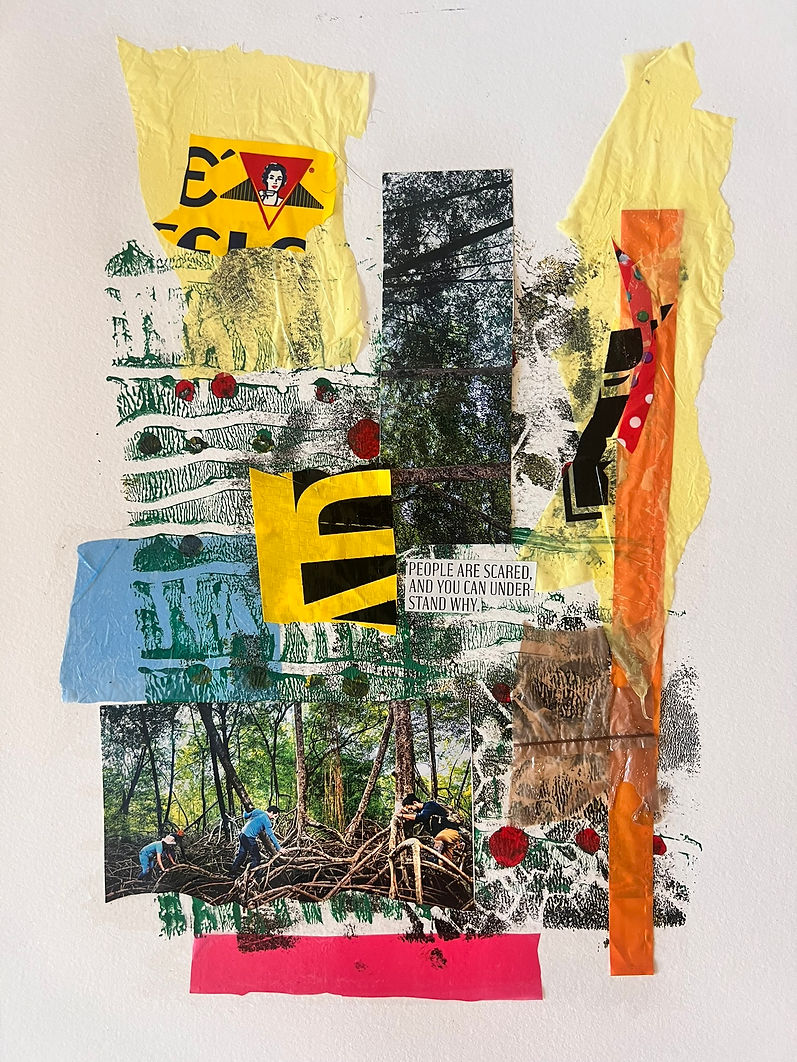
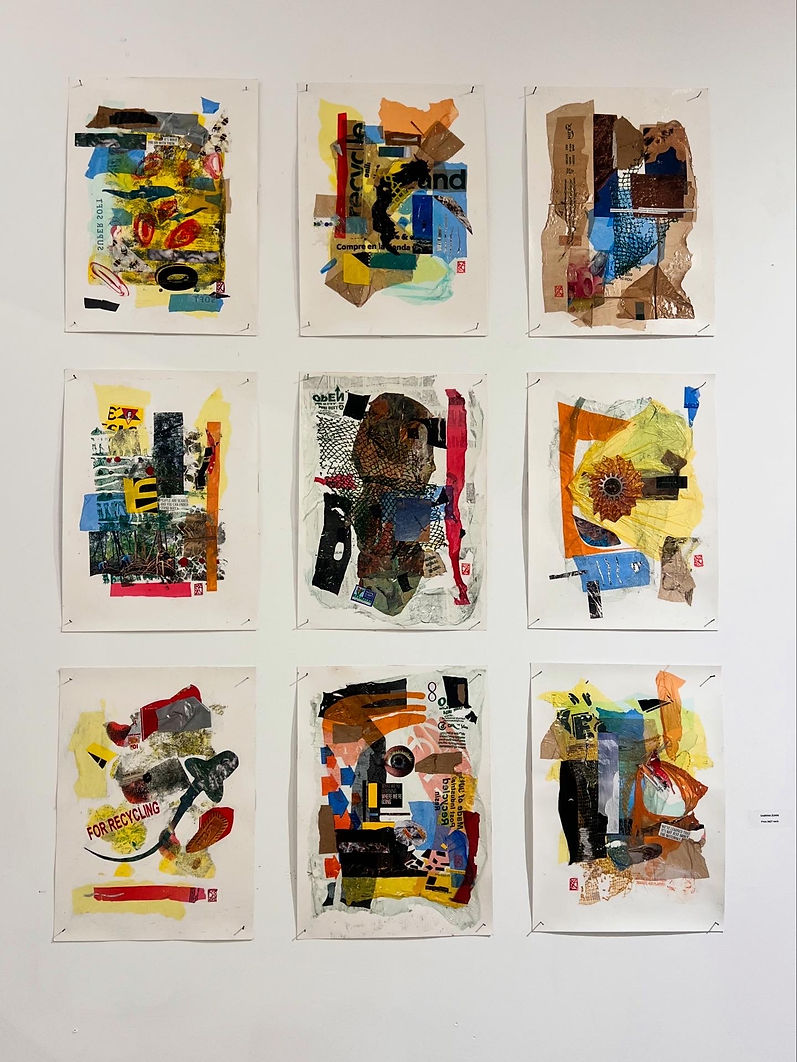
Fragments of the Anthropocene is a series of nine mixed-media collages developed through walking, collecting, and observing the everyday landscape of Miami.
Walking has become an important part of my creative process. I walk to clear my thoughts, but also to look more carefully at what is usually overlooked: fragments of plastic, printed paper, packaging, natural materials, discarded objects, and small traces left behind by human activity.
I bring these fragments back into the studio and combine them through collage, layering printed paper, plastic, found objects, and other collected materials. Removed from their original surroundings, these fragments become part of new compositions in which manufactured and natural materials exist alongside one another.
The title refers to the Anthropocene as a way of thinking about the visible traces of human presence within the environments we inhabit. Rather than presenting a fixed landscape, the works construct fragmented ones—made from the small, ordinary remains of everyday life.
The process is intuitive and accumulative. I do not always know what an object will become when I pick it up. Walking allows me to collect without a predetermined destination, while collage becomes a way of reorganizing these discoveries and creating new relationships between materials.
Through these nine works, Fragments of the Anthropocene considers consumption, waste, observation, and the increasingly blurred boundary between the natural and the manufactured. What is discarded, overlooked, or considered insignificant becomes material for looking again.